





…… FROM ENGINEER TO NATION BUILDER, THE OILSERV CHAIRMAN AND GCEO
The Engineer Who Came Home -
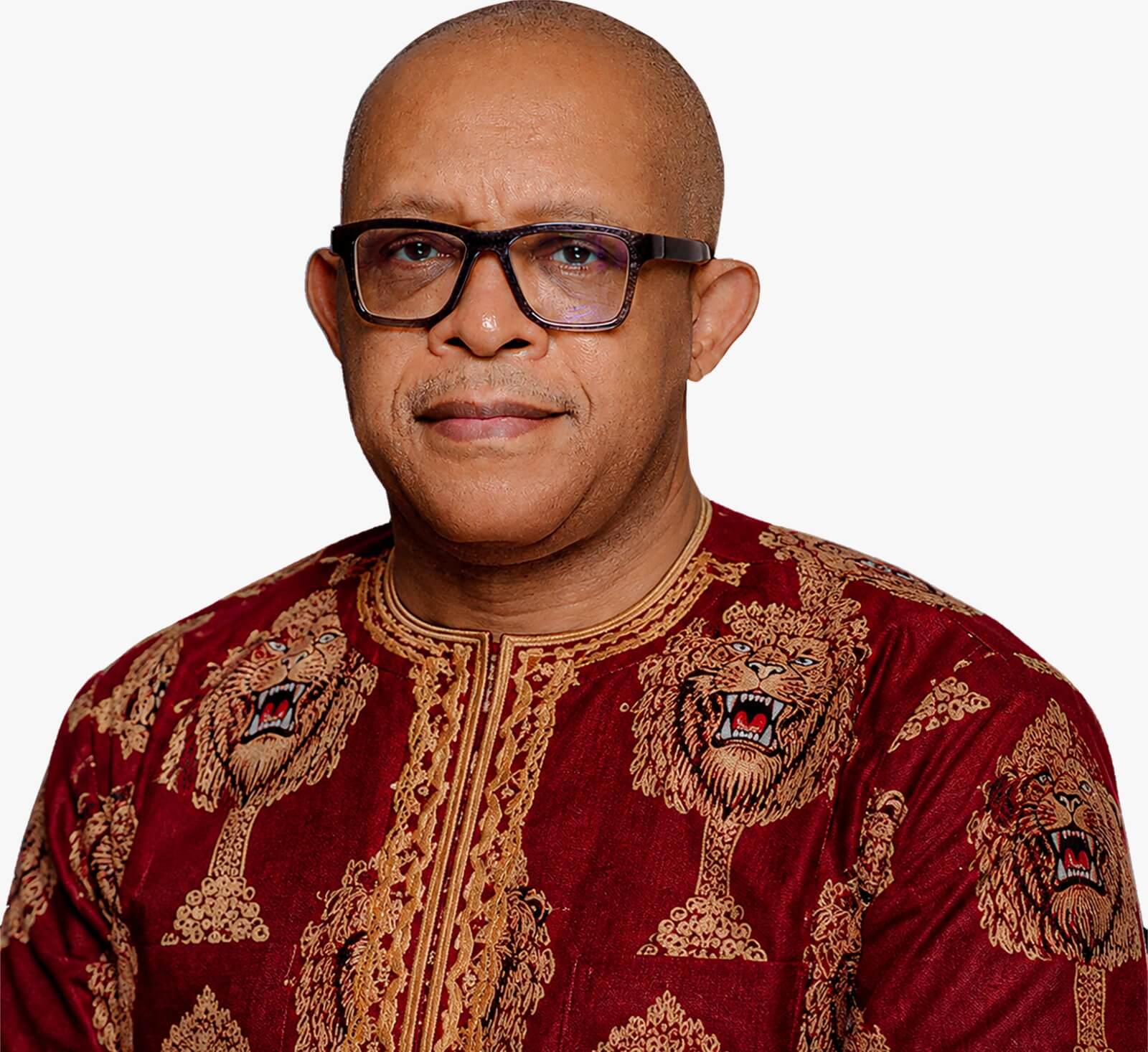
Some men build companies. There are men who build careers. And then, once in a while, there comes a man who spends his lifetime building something much larger than either; a legacy. At 65, Engr. Emeka Okwuosa, CON, stands at that rare intersection where engineering, enterprise, national development and philanthropy converge. His is not merely the story of a businessman who succeeded in Nigeria's oil and gas industry. It is the story of an engineer who returned home when it would have been easier to remain abroad; a businessman who chose to build Nigerian capacity rather than simply trade in the Nigerian market; a leader who placed people above machines, money and technology; and a philanthropist who came to understand that the most enduring form of giving is not merely to provide an answer, but to build the capacity to keep solving the problem.
For more than three decades, his name has become intertwined with the rise of indigenous engineering capability in Nigeria's energy sector. His journey is a compelling reflection of what can happen when technical knowledge meets entrepreneurial courage, when vision is matched by determination, and when success is continually reinvested into an institution and a nation. Beneath the roads, across rivers, through forests and beneath the earth, a part of that story can be found in the pipelines that carry the energy upon which industries, businesses and communities depend. But every great infrastructure story begins somewhere. This one began with an engineer who came home, carrying with him experience, ambition and a conviction that Nigeria could build the technical capacity it needed to shape its own future.
Before Oilserv became a formidable indigenous engineering enterprise, before the major gas pipelines and landmark infrastructure projects, and before the boardrooms, accolades and national recognition, there was simply an engineer with a vision and a consequential decision to make a difference. After studying Electrical and Electronics Engineering, Engr. Emeka Okwuosa began his professional career with Schlumberger International, an experience that took him across 13 countries and exposed him to diverse engineering environments, global standards, and advanced technical practices. He had seen the world, acquired invaluable expertise, and gained firsthand experience of what world-class engineering could achieve. Yet, in 1993, he made the defining choice to return home to Nigeria, bringing with him not only international experience, but also a conviction that the knowledge and capabilities he had acquired could be deployed to build something meaningful in his own country. That decision would prove transformative, not only for his personal journey, but also for the emergence of a stronger indigenous presence in Nigeria's oil and gas industry.
At the time, the Nigerian oil and gas services industry was still heavily dependent on foreign technical expertise. Indigenous participation existed, but the depth of local engineering capacity required to execute increasingly complex projects remained limited. Okwuosa came home with a simple but audacious idea: Nigeria did not merely need Nigerians participating in the industry; Nigeria needed Nigerians capable of building the industry. That idea would become Oilserv. What began as a construction company would progressively evolve into a full Engineering, Procurement, Construction, Installation and Commissioning enterprise. But the transformation was never simply about growing a company. It was about growing capability.
There is a difference between owning a business and building an institution. A business can be established to make money; an institution is built to endure. Oilserv's evolution reflects that distinction. The company moved deliberately from construction into increasingly sophisticated engineering and EPCIC delivery, developing capabilities that enabled it to undertake projects of greater scale and complexity. Gas infrastructure became a particularly important part of that journey. Today, Oilserv Group has expanded beyond its flagship EPC business into a diversified group with interests spanning engineering, energy, exploration and production, non-destructive testing, gas utilisation and other emerging areas.
Yet beneath the diversification lies one enduring philosophy: build capability, create value and remain relevant. That philosophy would become most visible in the vast network of gas infrastructure that Oilserv helped construct across Nigeria. For Okwuosa, engineering has never been merely about putting structures in place or completing contracts. It has been about creating the physical systems that enable economies to function and societies to progress. In that sense, every project became part of a larger national story, one in which indigenous expertise could gradually replace dependence and Nigerian enterprise could demonstrate its ability to execute complex infrastructure at scale.
A pipeline is easy to overlook. You do not see most of it. You do not hear it. You drive over it, walk above it and build cities around it. Yet beneath the Nigerian landscape, thousands of kilometres of steel carry an invisible lifeline—energy that feeds industries, supports power generation and enables economic activity. For Okwuosa, gas infrastructure represents more than steel laid beneath the earth. It represents possibility. As he explained in his recent interviews with the BBC and Times Africa Magazine, natural gas presents a unique infrastructure challenge. Unlike crude oil, gas cannot simply be stored and transported at scale in its natural state without specialised infrastructure.
It must be processed. It must be transported. It must be distributed. And, ultimately, it must reach the people and industries that need it. That is the space Oilserv deliberately entered. Okwuosa states that the company has built more than 70 per cent of Nigeria's gas pipeline infrastructure under the Nigerian Gas Master Plan since 2000 and employs close to 2,000 people. The numbers are impressive, but the projects tell an even more powerful story. They reveal a company that steadily moved from executing individual assignments to becoming a major indigenous participant in the infrastructure architecture required to unlock Nigeria's gas resources and support the country's wider economic ambitions.
In 2001 came the Lagos Gas Distribution System for GasLink. It was Oilserv's first full EPC project. For the company, it was more than a contract. It was a declaration. The company was demonstrating that an indigenous Nigerian enterprise could move beyond construction and deliver integrated engineering, procurement and construction. Then came the National Integrated Power Projects. Nigeria had invested in gas-fired power plants, but there was a fundamental problem. The turbines were there. The gas was there. But in several instances, the pipelines required to connect the gas to the power plants were not yet in place.
It was like building a magnificent engine and forgetting to connect the fuel line. Oilserv stepped into that gap. Infrastructure was built. Gas was delivered. And another chapter was added to the story of indigenous engineering capability. Then came the 128-kilometre gas pipeline linking Ukanafun in Akwa Ibom State to Mfamosing in Cross River State. The terrain was difficult. The work was demanding. Yet the project was delivered on schedule and below budget. It was another demonstration that indigenous engineering capacity could be developed, strengthened and deployed to execute projects under challenging conditions. And then came OB3, another defining chapter in the Oilserv story.
The Obiafu-Obrikom-Oben pipeline became another defining chapter in the Oilserv story. Okwuosa describes it as the largest-diameter pipeline built in Nigeria, complemented by a massive 2 billion standard cubic feet per day gas treatment plant. At this scale, engineering becomes more than calculations on paper. It becomes endurance. It becomes logistics. It becomes the ability to make thousands of decisions correctly, day after day, across difficult terrain and complex operating environments. It becomes the ability to bring people, machines, capital, communities, regulators and technical expertise together around one objective: deliver.
The significance of such projects goes beyond the physical infrastructure itself. They demonstrate what is possible when an indigenous company develops the technical, financial and organisational capacity required to compete at the highest levels of the energy industry. OB3 became another chapter in the continuing evolution of Oilserv, while also reinforcing Okwuosa's conviction that Nigeria's development requires companies that can undertake complex projects with the competence, discipline and institutional resilience required to deliver them. And then there was AKK, perhaps one of the most strategically significant projects in the continuing story of Nigeria's gas infrastructure development.
Ajaokuta-Kaduna-Kano. Three cities. One strategic corridor. One enormous national ambition. For Okwuosa, the AKK pipeline is not simply another engineering project. It is a strategic component of the Nigerian Gas Master Plan. Its significance extends beyond the pipeline itself. The project is designed to move gas towards northern Nigeria, support industrialisation and potentially be a catalyst for wider regional energy infrastructure. Its importance lies in what it can make possible: greater access to gas, stronger industrial activity, increased energy availability and the development of economic opportunities across regions that have historically faced significant infrastructure limitations.
That is why the story of Emeka Okwuosa cannot be separated from the story of Nigeria's infrastructure aspirations. His legacy is not confined to a corporate office or a list of completed contracts. It runs through the infrastructure beneath the Nigerian landscape. Steel. Gas. Energy. Possibility. It is a legacy embedded in physical assets that are designed to outlive the individuals who conceived, financed, engineered and constructed them. At 65, therefore, the significance of Okwuosa's journey is reflected not simply in the company he leads, but in the infrastructure that has become part of Nigeria's evolving economic landscape.
Yet, surprisingly, when Okwuosa speaks about Oilserv's success, he does not begin with the enormous machines. He does not begin with technology. He does not begin with money. He begins with people. "Our success factor is based on our people." That philosophy explains much about the institution he has built. A pipeline project does not ask whether the forest is difficult. It does not negotiate with a mountain. It does not postpone itself because a river is wide. The project must move through forests, across rivers, over difficult terrain, around communities and amid security concerns, while meeting environmental requirements and remaining within budgets and contractual schedules.
Machines may provide capability, but people turn capability into results. That is why, for Okwuosa, human capital is not merely an HR slogan. It is an engineering asset. The success of a major infrastructure project depends on the people who plan it, design it, supervise it, execute it, manage its risks, and ultimately take responsibility for its delivery. In an industry where technical mistakes can have serious consequences, competence is not optional. It is fundamental. Okwuosa's emphasis on people therefore represents one of the most important foundations upon which Oilserv's growth has been built.
More than two decades ago, Oilserv began structured technical and graduate training programmes. Operators were trained. Welders were trained. Fitters were trained. Graduates were trained. Industrial trainees and members of the National Youth Service Corps were given opportunities to acquire practical, on-the-job experience. And some of those who came to learn eventually stayed to become part of the institution. The approach reflected a recognition that sophisticated engineering capability cannot simply be purchased from the market; it must be cultivated, developed and continuously renewed.
But perhaps the most revealing part of Okwuosa's philosophy is what happens when they leave. He does not consider the investment wasted. If an employee trained at Oilserv eventually takes those skills elsewhere, he sees the development of that person as a contribution to Nigeria. That is a powerful philosophy in a country where the shortage of technically skilled manpower remains one of the major constraints to industrial development. It means that every trained engineer, technician, operator or graduate becomes part of a larger national story. The institution gives. The individual grows. The industry benefits. And the country becomes stronger.
Building infrastructure in Nigeria requires more than engineering brilliance. It requires financial credibility. Before a major project even begins, an indigenous contractor may be required to secure performance bonds running into millions of dollars. Banks must trust the company. Financial institutions must believe in its capacity. Partners must believe it can deliver. Clients must believe that its word is as strong as its balance sheet. That kind of credibility is not bought overnight. It is earned project by project, contract by contract, promise by promise and delivery by delivery.
For Engr Okwuosa, the formula is straightforward: deliver what you undertake, preserve your credibility and reinvest in the institution. That philosophy helped create a culture of continuous renewal within Oilserv. Rather than treating every successful project as an endpoint, the company has continued to view success as a platform from which greater capability can be developed. The willingness to reinvest in systems, people, technology and equipment has therefore been central to the company's ability to remain competitive. It is also part of the explanation for how an indigenous enterprise established decades ago has continued to evolve in an industry characterised by intense competition, changing regulations, technological disruption and difficult economic cycles.
The breadth of Engr. Emeka Okwuosa's contribution has also attracted recognition from professional institutions, industry bodies and organisations across Nigeria and beyond. His distinctions include the National Productivity Order of Merit Award, the PETAN Lifetime Achievement Award, the US Africa International Oil & Gas Leadership Award, the Nigeria Advancement Award for Creativity and Enterprise, the International Socrates Award in the United Kingdom, the Nigerian Gas Association Award of Excellence and the Investor of the Year Award by The Sun Newspaper. His work has also earned repeated Awards of Excellence from OTC/PETAN in Houston, Texas, across several years, reflecting sustained recognition within the international oil and gas community.
His recognitions have extended across academia, professional engineering, and international industry platforms. He received Awards of Excellence from the Physics Department and Nanotechnology Research Group of the University of Nigeria, Nsukka, as well as the 2014 Distinguished Achievement Award from PETAN. He was also recognised with the Best Partner Award by the Ministry of Mines and Water/SEMICA of the Republic of Benin. In 2022, he received the Distinguished Anambra State Commander Medal and was conferred with the Commander of the Order of the Niger, one of Nigeria's foremost national honours. These distinctions are significant not simply because of their number, but because they span engineering, enterprise, productivity, energy leadership, innovation and national service.
Yet, for a man whose career has been shaped by purpose rather than applause, the awards appear less like destinations than milestones along a much longer road. Each recognition represents an external acknowledgement of work that has already been measured in projects delivered, people developed, businesses built and institutions established. The honours tell one part of the story; the infrastructure tells another. The people trained tell another. The communities touched tell another. And perhaps the most meaningful recognition is found in the continuing relevance of the institutions he has built and the opportunities they continue to create.
One of the most revealing features of Engr Okwuosa's leadership is his refusal to treat success as a permanent condition. What worked yesterday may not work tomorrow. Technology changes. Markets change. Customers change. Regulations change. Competition changes. Therefore, the organisation must change too. That philosophy found expression in the Oilserv Rejuvenation Programme, a deliberate effort to examine systems and processes, identify what is working, confront what is not working and continuously improve the institution.
It is a simple principle, but it is the principle that separates organisations that merely survive from those that remain relevant. Oilserv has therefore continued to invest in enterprise systems and technology. Among these investments was the deployment of SAP S/4HANA, which Okwuosa describes as the maiden deployment of the system in Nigeria at the time. For him, technology is not a trophy. It is a tool. The objective is not to adopt technology because technology is fashionable. The objective is to ensure that the institution remains capable of competing in a changing world and is equipped with systems that can support the scale and complexity of its operations.
For some people, 65 is a number that invites reflection on the road already travelled. For Emeka Okwuosa, it appears to be an invitation to look further down the road. The next chapter is already taking shape. Oilserv Group is increasingly moving beyond traditional EPC contracting. Through FrazEnergy Limited, the Group is pursuing opportunities across the gas utilisation value chain, including processing, storage and delivery. There is a CNG plant. There is participation in an LNG development. There are plans around a major methanol project.
Other businesses within the Group are active in engineering, exploration and production, non-destructive testing and industrial agriculture. The message is clear: the future of Oilserv will not be built only around pipelines. It will increasingly be built around what the pipelines make possible. This represents a broader strategic evolution from infrastructure delivery towards participation in the industries and economic activities that depend upon that infrastructure. It reflects Okwuosa's understanding that Nigeria's natural resources can create significantly greater value when they are processed, utilised and transformed into industrial outputs rather than simply extracted and transported.
Engr Okwuosa does not see the future of energy as a simple battle between oil and renewables. His view is more pragmatic. Africa needs energy. Africa needs affordable energy. Africa needs reliable energy. Africa needs energy to industrialise. At the same time, the global energy system is moving progressively towards lower-carbon sources. In that transition, natural gas occupies an important space. It can serve as a bridge between the traditional dominance of oil and the expanding role of renewable energy. And that creates opportunities far beyond pipeline construction.
LNG. CNG. Methanol. Urea. Fertiliser. Gas-based industries. The opportunity is enormous. The real prize is not merely moving gas from one point to another. It is converting gas into industrial capacity, jobs, businesses and economic value. That is the next frontier. For Okwuosa, the development of Nigeria's gas resources must ultimately translate into broader economic transformation. The infrastructure must enable industries to emerge, businesses to grow, jobs to be created and communities to benefit. The objective is therefore not simply to build the energy infrastructure of today, but to help create the industrial ecosystem of tomorrow.
But the vision does not end at Nigeria's borders. Oilserv's activities and ambitions extend into countries including the Republic of Benin and Uganda, with efforts to establish a presence in Gabon and the Republic of the Congo. This is not simply about putting an Oilserv sign in another country. It is about something bigger. Africa possesses enormous natural resources. But resources alone do not create prosperity. Infrastructure does. Technical expertise does. Industrial capacity does. Human capital does. And many African countries possess substantial gas resources without the infrastructure required to process, transport and utilise them effectively.
That infrastructure deficit is a challenge. For Okwuosa, it is also an opportunity. The broader proposition is compelling: Africa's energy future will require African technical capacity. And Nigerian companies that have demonstrated the ability to deliver complex energy infrastructure have a role to play in that future. The expansion of Oilserv's ambitions across the continent therefore represents more than geographical growth. It reflects a belief that Nigerian engineering expertise can be deployed to address African infrastructure challenges and contribute to the development of an interconnected continental energy ecosystem.
But if the story ended with pipelines, it would still be incomplete. Because there is another side to Emeka Okwuosa. The philanthropist. The man who looks beyond contracts and balance sheets. The story begins much earlier. He remembers watching his parents, who were teachers, give to others even when they were not wealthy. That childhood experience planted something: the understanding that giving is not necessarily a function of how much one possesses. It is a function of how much one is willing to share.
His early philanthropic interventions focused on basic social infrastructure—water boreholes, roads, erosion control, electricity infrastructure and support for indigent people. Over time, the work grew. Social services. Education. Healthcare. The philosophy was consistent with the approach that had shaped his business career: identify a problem, understand its root causes and determine how best to create a sustainable solution. Through the Sir Emeka Okwuosa Foundation, philanthropy gradually moved from individual acts of assistance towards the development of institutions and infrastructure capable of delivering lasting social impact.
The Sir Emeka Okwuosa Foundation (SEOF) began supporting medical outreach programmes involving medical professionals from the United States and Europe. People were treated. Lives were touched. But Okwuosa saw a deeper problem. If communities repeatedly needed specialist medical intervention, why keep bringing the service temporarily when a permanent institution could be built? The question was simple. The answer required courage. Build the hospital. And so the vision of a specialist cardiothoracic hospital took shape.
Commissioned in 2022, the facility has provided more than 224 successful open-heart surgeries and interventional cardiology services to adults and children between 2022 and July 2026, with a significant proportion of beneficiaries being indigent Nigerians. International medical teams, comprising dozens of medical professionals, participate in specialised medical campaigns. The foundation subsidises or pays for treatment for patients who cannot afford it. But again, the philosophy is bigger than charity. It is capacity building. The same principle that drives the engineer drives the philanthropist: identify the gap, understand the problem, build the capacity and create something that can endure.
There is one word that repeatedly emerges when Emeka Okwuosa reflects on his journey. Purpose. Purpose explains why he came home. Purpose explains why Oilserv kept investing during difficult times. Purpose explains the emphasis on training. Purpose explains the reinvestment. Purpose explains the philanthropy. Nigeria has tested the endurance of many businesses. Oil prices have crashed. Projects have slowed. Financing has become difficult. Infrastructure deficits have persisted. Markets have changed. Yet Oilserv endured. And more than endurance, it evolved.
Perhaps that is the clearest measure of the institution Okwuosa has built. Because favourable markets can create companies, but values create enduring institutions. The ability to survive difficult economic cycles is important, but the ability to emerge from those periods with stronger capabilities is even more significant. Okwuosa's journey demonstrates the importance of having a clear purpose that extends beyond immediate commercial returns. It is that purpose that has repeatedly provided the rationale for investing in people, technology, infrastructure, diversification and social development, even when the immediate economic environment has not been favourable.
At 65, perhaps the most important question is not: how many years has he lived? It is: what remains because he lived them? There are pipelines. There are treatment plants. There are engineering projects. There are businesses. There are employees. There are engineers and technicians who acquired skills. There are graduates whose careers began through opportunities created by the organisation. There are communities that received support. There are children who received medical care. There are patients whose hearts still beat because someone decided that a specialist hospital should exist.
Some institutions will continue beyond the individual who created them. That is the difference between achievement and legacy. Achievement asks: what did I accomplish? Legacy asks: what continues because I was here? By that measure, the journey of Emeka Okwuosa cannot be reduced to corporate performance, project statistics or personal milestones. Its true measure is found in the people, infrastructure, institutions and opportunities that have emerged from his years of work. His legacy is therefore not a monument to one man, but an expanding network of capacities that can continue to serve people long after the builder has moved on.
For a man who has spent much of his professional life building infrastructure for the future, 65 does not look like an ending. It looks like another junction. The next chapter points towards deeper participation in gas utilisation, greater expansion across Africa, stronger technology and enterprise systems, continued investment in human capital, and new businesses capable of transforming natural resources into industrial and economic value. It also points towards an expanding humanitarian vision in healthcare and other areas of social development.
The engineer and the philanthropist may appear, at first glance, to inhabit different worlds. But in Emeka Okwuosa, they are powered by the same idea: build, develop, create capacity, solve problems, and leave something useful behind. That may ultimately be the most fitting description of his life's work. He has spent decades building physical infrastructure, but the deeper infrastructure he has helped create is human and institutional: people equipped with skills, organisations equipped with systems, communities equipped with facilities, and businesses equipped to take on greater challenges.
There is poetry in the arc of the story. An engineer leaves Nigeria. He works across 13 countries. He learns. He gains experience. And then he comes home. He does not return merely to find a place in an existing system. He returns to build. From a construction company emerges an EPCIC enterprise. From projects emerge capabilities. From capabilities emerge people. From people emerges an institution. From an institution emerges a diversified energy group. And from success emerges a responsibility to give back.
It is a distinctly African story. A story of coming home. A story of building where others saw limitations. A story of resilience in an industry that has repeatedly tested the strength of indigenous enterprise. A story of technical knowledge transformed into national capacity. A story of entrepreneurship transformed into institution-building. And ultimately, a story of success understood not as an entitlement, but as an obligation to contribute. At 65, Engr. Emeka Okwuosa, CON, has already travelled a remarkable distance. But perhaps the most important thing about his journey is that it does not appear to be finished.
The roads have been built. The pipelines have been laid. The companies have grown. The institutions have taken root. The lives have been touched. And yet, somewhere ahead, another challenge is waiting. Another gap to fill. Another bridge to build. Another generation to train. Another industry to develop. Another African opportunity to pursue. So perhaps the best way to describe Engr. Emeka Okwuosa at 65 is not as a man looking back at what he has achieved. It is as a man looking ahead at what still needs to be built. Because for the engineer who came home, the work has never really been about the road already travelled. It has always been about the road ahead. And the next chapter is already being engineered.