









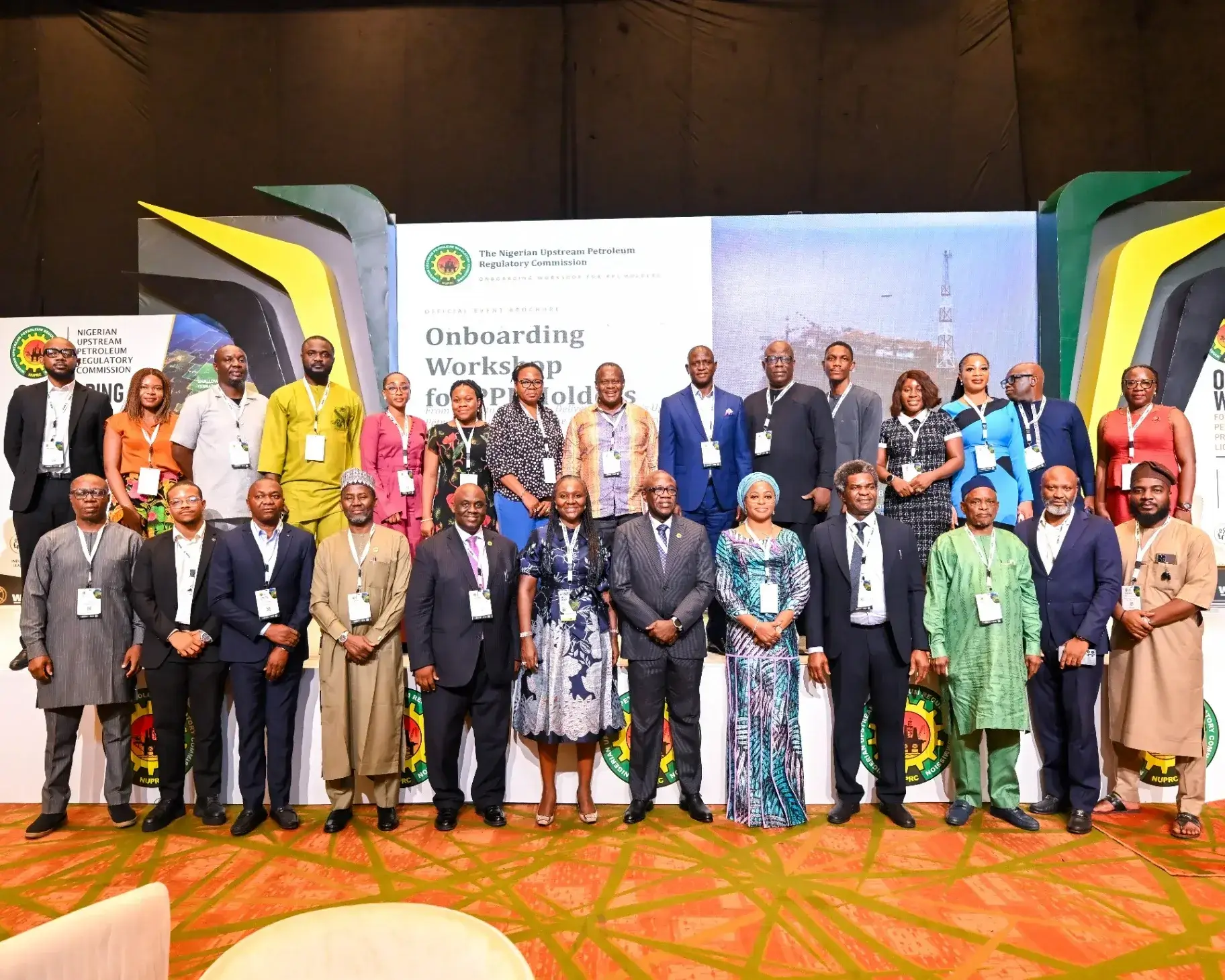
Nigerian Upstream Petroleum Regulatory Commission has reiterated the Federal Ministry of Petroleum's commitment to meeting the nation's production target of 3mmbpd by 2030 through compliance with the Petroleum Industry Act, 2021, which stipulated the " Drill or Drop policy.
The Commission Chief Executive, NUPRC, Mrs. Oritsemeyiwa Eyesan, said this in Lagos on Tuesday, October 20, 2026, at a two-day onboarding workshop for the new awardees themed, ‘From Award to Production: Delivering Nigeria’s Upstream Potential Under the Petroleum Industry Act, 2021’.
The Chief Commissioner, while advising the new awardees to learn from successes and mistakes of past winners, restated the October 31, 2026 deadline for idle oil and gas licences in line with the drill or drop provision enshrined in the Petroleum Industry Act.
Eyesan, on the sidelines of the event, informed journalists that the purpose of organizing the event- an onboarding workshop is to guide new awardees from the inception of their drilling campaign to achieving first oil.
“For this set of awardees, we are expecting nothing less than 250,000 barrels per day in the next five years at least from the 22 awards,” Eyesan said, adding that Nigeria remains on course to hit 3mmbopd by 2030.
The first day of the onboarding programme covered five technical sessions, from licence award to first oil production, and was attended by subject matter experts from the Commission as well as notable professionals from legal and financial institutions who provided firsthand knowledge to the new awardees.
Focus areas included: regulatory framework, work programme, exploration, appraisal and commerciality, field development, well operations and production as well as exploration financing.
Eyesan added, “We have issued a directive that by the end of this month, those who were awarded licenses and have not done anything within the stipulated time – three years for those onshore and five years for those offshore – the Commission will call in those blocks.
“It's going to be drill or drop. This is standard practice worldwide. In the UK, in the Netherlands, all over the world.”
“We want to see that in the next two years, more than half of you have reached first oil. In the next three, four years, you are drilling your second well.”
The chief executive therefore noted that the company would no longer grant such extensions automatically.